Is the T-72 Tank in Wardogs Really Overpowered or Just Misunderstood?
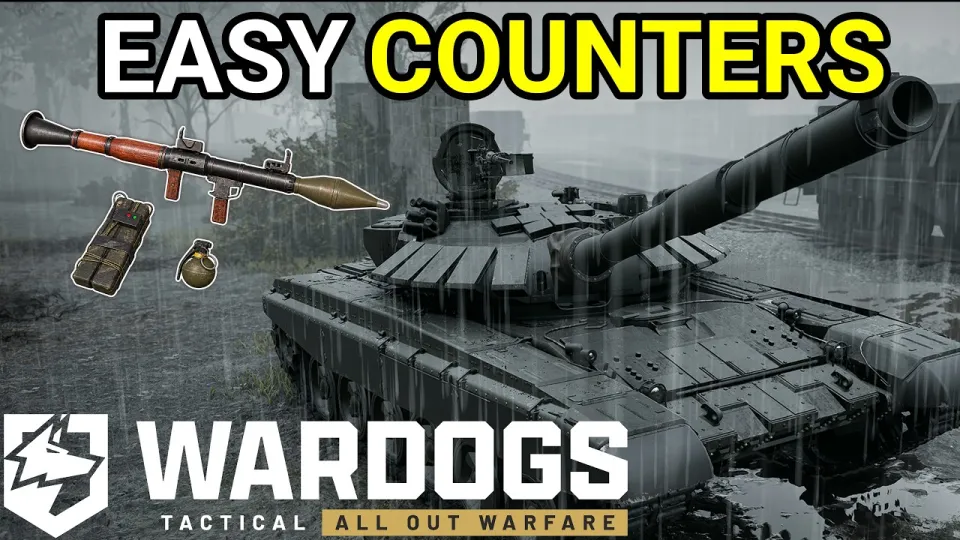
Video: Why Everyone Hates the T-72 Tank in WARDOGS
Need articles like this for your video? They help promote it on YouTube and Google — order them in the Telegram bot @sat_sit_bot. Articles with your video embedded are written and posted by the bot itself — on popular topical sites (no ads). Try it free: 50 articles on us.
· based on the channel Josephant
The T-72 in Wardogs is not truly overpowered, but it is badly explained. Its armor rewards bad RPG habits and punishes solo players, while a coordinated squad with C4 and a flanking route can kill it in seconds. The tank feels unbeatable mostly because most players bring the wrong tool and use it the wrong way.
Why the Wardogs T-72 Tank Feels Unkillable
The T-72 is a heavy vehicle with layered armor, and in Wardogs that armor is modeled as a total protection value rather than a single health bar. A hit from an RPG warhead does not simply subtract a fixed chunk of that value; the angle, the impact point and the distance from the hull all change the result. That is why a rocket that lands beside the tracks can strip more armor than one that detonates cleanly on the turret face.
Players also fight the tank on its terms. The T-72 has a third-person camera, so the driver sees far more than the gunner's sight would show, and it moves fast enough to break line of sight before a second rocket is loaded. Add the fact that many public matches have no one carrying anti-armor at all, and the tank farms infantry who never had a counter in the first place. The perception of invincibility is real, but it comes from the encounter, not from the numbers.
What Actually Damages the T-72 in Wardogs
C4 is the single most dependable answer to a T-72. The charge ignores most of the armor question entirely and rewards positioning over raw firepower. A player who reaches the rear of the hull, plants the charge and backs off can kill a full-health tank without firing a shot. The catch is the approach: the third-person camera means the driver can spot a flanker early, and a tank that reverses away from a planted charge wastes the attempt.
Grenades work better than most players expect. Shrapnel from a fragmentation grenade can damage the hull, and the throw range is longer than the reach of an RPG in tight urban lanes, which makes grenades a practical harassment tool against a tank parked near a wall. They will not kill it alone, but they strip armor and force the driver to move.
RPGs still matter, but placement decides everything. Aim for the rear and the tracks, fire from an angle rather than head-on, and expect to need more than one rocket. A single hit from the front is the least efficient way to spend a warhead in the entire game.
RPG Damage, Humvees and the Bugs Players Keep Reporting
One of the loudest complaints around the T-72 is that rockets seem to do more damage on a near miss than on a direct hit, and that the same warhead hurts a Humvee less than it hurts the tank. Whether that is an intentional armor model or a hit-registration quirk, the practical effect is the same: players stop trusting the RPG and stop carrying it.
That mistrust compounds. If a squad believes rockets do not work, they stop bringing them, and then the next tank they meet really is unkillable. The fix is behavioral as much as technical. Treat the RPG as a disruption tool that damages tracks and forces the driver to reposition, and treat C4 as the actual kill button.
Progression is the other half of the story. Drivers who level the tank early gain durability and mobility perks that a fresh crew does not have, and crews that rushed that progression created the first wave of complaints. A maxed driver in a T-72 is a genuinely different vehicle from a stock one.
How to Counter the T-72 Tank in Wardogs
- Bring C4 on at least one squad member every match. It is the only reliable close-range kill.
- Approach from the rear or the side, never down the gun barrel, and use walls to break the third-person sightline.
- Listen before you look. The engine is loud and gives away the tank from roughly 150 meters, which is enough warning to set an ambush.
- Fire RPGs from an angle at the tracks and rear, and accept that two or three rockets may be needed.
- Use grenades to chip armor and push the driver out of a camping spot.
- Deny the open ground. A tank in a street is killable; a tank on a ridge with clear sightlines is not.
The Unlock Threshold and Helicopter Comparison
The most common structural complaint is not about armor values at all. Attack helicopters and heavy artillery are locked behind a 20-point threshold, while the T-72 can appear far earlier in a match. Players who remember the previous season's helicopter dominance point out the asymmetry: the helicopter was gated, the tank is not.
A reasonable middle ground would be to gate the T-72 behind the same 10 or 20-point mark as the other heavy assets, so both teams have time to unlock their own counters before armor rolls into the fight. Until that changes, the practical advice stands: assume a tank is coming early, and build the squad around killing it rather than around surviving it.
Typical Player Questions About the Wardogs Tank
The questions players actually ask about the T-72 fall into three groups. First, is it killable at all? Yes, with C4 and flanking. Second, why do RPGs feel broken? Because splash and impact modeling make near misses count, and because frontal hits are the worst possible shot. Third, should the tank be nerfed? Many players argue it should stay strong but unlock later, matching the helicopter and artillery gate.
There is also a doctrine argument that keeps resurfacing: real tanks never roll alone, and a T-72 with infantry screening its flanks is far harder to kill than a lone one. That cuts both ways in public matches, where a full squad supporting one tank is rare. The tank is strongest when the enemy team is disorganized and weakest when four players decide, together, to hunt it.
Conclusion
The T-72 in Wardogs is a strong vehicle wrapped in a confusing damage model, and most of the hate comes from players firing frontal RPGs at it and calling it invincible. C4, grenades, rear-angle rockets and a squad that actually carries anti-armor turn it into a very expensive target. If you want a full breakdown of the RPG, C4 and grenade behavior against the tank, Josephant's video analysis covers exactly that ground and is worth watching before your next match.
Key takeaways
- The T-72 is a late-unlock armored vehicle in Wardogs that absorbs multiple RPG hits before dying.
- RPG splash damage is widely reported to hurt the tank more on a near miss than on a direct hit.
- C4 planted by infantry is the most reliable close-range counter to the T-72.
- Third-person view on the tank makes flanking harder, but its engine is audible from roughly 150 meters.
- Attack helicopters and heavy artillery are gated behind a 20-point threshold, while the tank is not.
Source: Why Everyone Hates the T-72 Tank in WARDOGS · Markdown version
Questions & answers
Can the T-72 tank in Wardogs actually be killed?
Yes. C4 planted on the rear or side of the hull is the most reliable kill, and multiple angled RPG hits on the tracks and rear will also destroy it. The tank is durable, not invincible, and it dies fastest when two or three players attack it from different directions at once.
Why does an RPG seem to do more damage when it misses the T-72?
The armor and splash modeling means a warhead detonating close to the hull can affect more of the protection value than a clean frontal impact. Whatever the exact cause, the practical lesson is the same: stop firing rockets head-on and aim for the rear and tracks instead.
Should the T-72 be nerfed or locked behind a point threshold?
Many players argue the tank should unlock at the same 10 or 20-point mark as attack helicopters and heavy artillery, so both teams have time to bring counters. Others think the tank is fine as it is and that the real problem is players not carrying anti-armor gear in public matches.
How do you sneak up on a T-72 that has third-person view?
Use hard cover to break the driver's sightline, approach from the rear, and listen for the engine, which is audible from around 150 meters. Grenades thrown from beyond RPG range are a safer way to chip armor and force the tank to move out of a camping position.